
Compare the Values on a Miami County Property Record
A single Miami County property record can carry several values that are easy to confuse. One is the appraised figure. Another is the class-based assessed amount. A third is whatever consideration appears on a recorded deed. They serve different purposes. They may carry different dates too. Beacon serves as the county's public window into appraisal history and property characteristics. The Treasurer's database ties a tax year and its status to the parcel. A recorded deed can give the strongest official sale reference. That holds when its public image shows consideration. Match the number to the question before drawing any conclusion from it.
| Value | What It Is | Where |
|---|---|---|
| Appraised value | The county appraiser's January 1 estimate under Kansas valuation rules | Beacon parcel report and value notice |
| Assessed value | The class-specific share of appraised value used in the tax formula | County appraisal and tax records |
| Sale consideration | The amount stated or reflected in a recorded transfer when publicly shown | Recorded deed or official court record |
| Land and improvements | Components that help explain how the parcel total was built | Beacon modules when available |
Assessment rates in Kansas depend on property class. Most residential real property is published at 11.5 percent of appraised value. Commercial and industrial property sits at 25 percent, vacant lots at 12 percent, and agricultural land at 30 percent of agricultural use value rather than ordinary market value. Apply the correct class before comparing two figures.
Miami County Values Are Dated to January 1
The Miami County Appraiser values property every year for tax purposes. January 1 is the assessment date. That single date matters. A sale, new construction, a demolition, or a split can come later in the year. A class change can too. Either way it will not match the county's figure. Both numbers can still be accurate for their own dates. Miami County describes Beacon values as certified snapshots. County GIS material notes that current values are certified in June. Tax information is certified in November. Later events may take time to appear. So whenever a Miami County property value is cited, save the value year. Also record the result date, parcel key, and source URL.
Read Miami County Market Studies as Trends, Not Appraisals
Market studies serve mass appraisal, not individual parcels. Miami County's 2025 trend indicators show movement of roughly 6 to 8 percent for residential property. Commercial sits at 3 to 5 percent, and vacant land at 10 to 20 percent. A 2026 paired-resale land report identified upward trends by market area. It did not offer one uniform multiplier. Treat every figure as a countywide tendency, never a parcel value.
Use the right scale. A countywide or market-area trend helps explain appraisal work, but it is not a parcel-specific sale estimate.
Condition, location, use, improvements, land class, and the comparison set still drive outcomes. Read the exact parcel report and its year before crediting a trend with any single change.
Beacon Shows Current and Prior Miami County Values
The county describes Beacon modules that may include current and prior appraised values, property characteristics, improvements, land size, tract descriptions, subdivision details, aerial or photo material, recent tax information, and comparable-property tools. Not every module appears for every parcel. Report only what a result actually shows. A sample Beacon parcel report appears in an Osawatomie council packet, which shows why one result can surface in more than one official file. The report includes a parcel key, owner display, situs and mailing details, value and tax history, a map or aerial, and related links. The packet illustrates the module pattern, not that every live card holds identical fields. The county GIS source also describes Beacon's value and comparable-property features. Read the certification date before comparing current and prior values on any card.
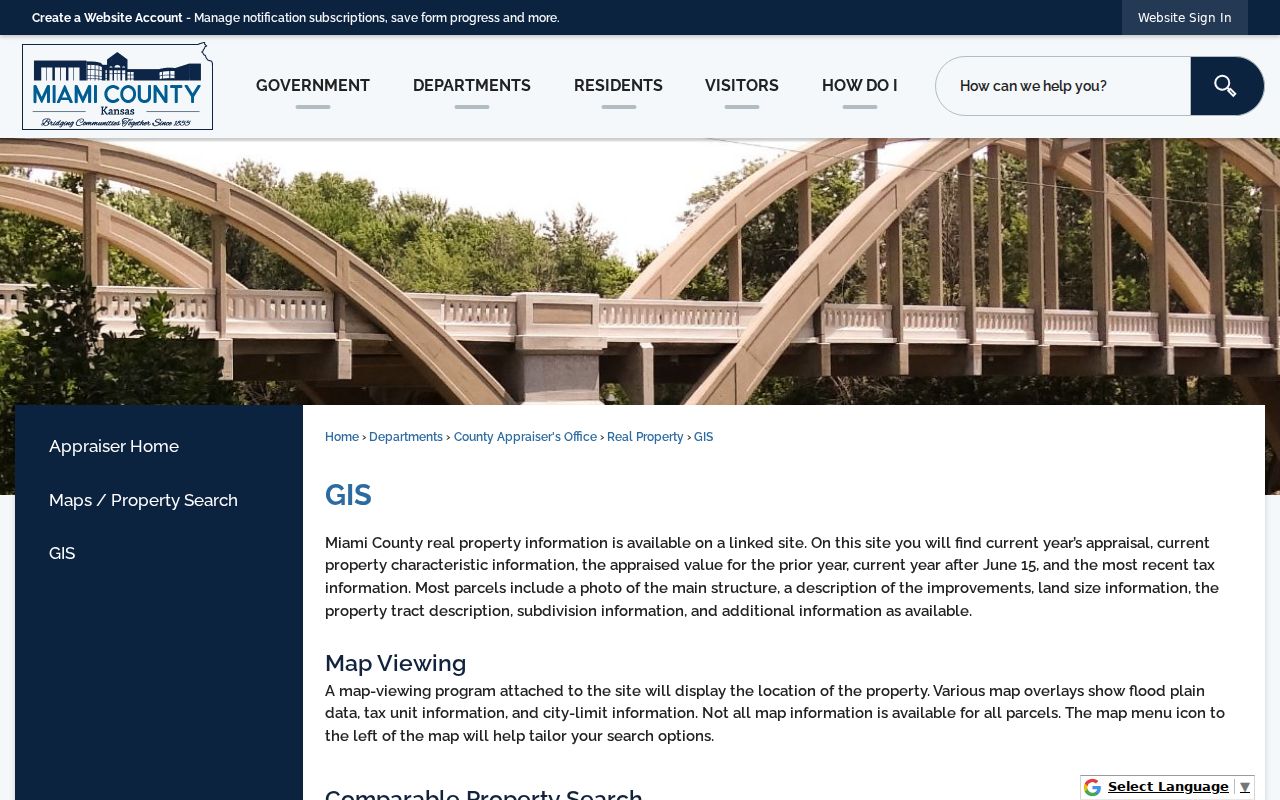
The county page itself repeats the lesson. Check the certification date on Beacon before comparing current and prior Miami County values.
Look Up a Miami County Property Value in Beacon
The Miami County Beacon search accepts a name, an address, a parcel number, or a section-township-range and legal-description route. Start with the most stable identifier and narrow the results before reading any value.
- Search the situs address and confirm the match with its parcel key and legal description.
- Open the parcel report and record the appraised and assessed figures with their year.
- Check the land, improvement, class, prior-value, and comparable modules that are actually present.
- Use the recorded instrument, not an estimate site, when an official sale reference is needed.
- Appraised value
- The county's estimate of full value for the applicable assessment date and method.
- Assessed value
- The appraised value multiplied by the Kansas rate for the property's class.
- Assessment rate
- The statutory percentage used to convert an appraised amount to an assessed amount.
- Reappraisal
- The annual process of reviewing property data and market evidence for tax administration.
Class Drives the Miami County Assessed Value
Never apply the residential rate to every tract. Kansas classifies real property by use. Commercial and industrial parcels, vacant land, residential property, and agricultural land can produce very different assessed values from the same appraised figure. Agricultural land is the clearest warning, since its tax basis is agricultural use value. The formula itself is simple. Appraised value multiplied by the assessment rate yields assessed value, and the tax bill then applies the mill levy and other rules. For bill details, payment status, exemptions, or protest routes, use the dedicated Miami County property tax records guide.
Separate Miami County Sale Price From Value
A sale price records what two parties agreed to in one specific transaction. Condition, timing, and financing can all shape it. Included personal property can shape it too. So can family and estate circumstances. None of this will show up in a mass appraisal. The Register of Deeds index can be searched by grantor, grantee, document number, date, legal description, and document type through Fidlar services. When a deed image shows consideration or a transfer-tax field, label the figure carefully. Include the recording date and the instrument. Never infer a price where the field is not public. Kansas closes the Real Estate Sales Validation Questionnaire. The absence of a public questionnaire reflects an access rule, not evidence that a sale never happened.
Resolve a Missing Miami County Value Through the Appraiser
Online parcel tools have limits. A Miami County parcel search can return too many matches, so tighten the address or parcel number until one parcel stands out. When the live card will not load, call the Appraiser at 913-294-9311 or email `countyappraiser@miamicountyks.gov`. Name the parcel precisely and ask for the current and prior appraisal record, its classification, and the effective year.
Some property records sit outside routine publication. A Kansas Open Records Act request can open those to inspection or electronic copies. Request a cost estimate first for a broad search. The statute permits actual-cost fees, advance payment, and a third-business-day response framework, though it never forces an office to produce a fresh appraisal on demand.
What a Miami County Property Value Cannot Prove
A county figure comes from mass appraisal for taxation. It is not a title opinion or a boundary survey. It is also not an inspection or a forecast of the next sale price. It can also trail a recent transfer or physical change. The record dates behind each figure differ. For a value tied to one transaction, commission a licensed appraisal built on current facts.
Value is not price. A Miami County assessed value supports taxation. It does not state what a buyer will pay or replace a licensed appraisal.
Use each county record for its stated purpose and date. Use the deed for the recorded transfer. Use the Treasurer for the billed amount. Use a survey for a legal boundary. Keeping those roles straight keeps a Miami County property value useful without asking it to prove more than the source allows.